Truss Roof Loft Conversions in Arnold
For a truss roof loft conversion in Arnold, expect a guide price of £45,000 to £72,000 including VAT and around 7 to 11 weeks on site. One company handles design, approvals and construction.
- Free home survey
- Fixed written quote
- Drawings and engineer included
- Building control handled
- UK-wide teams
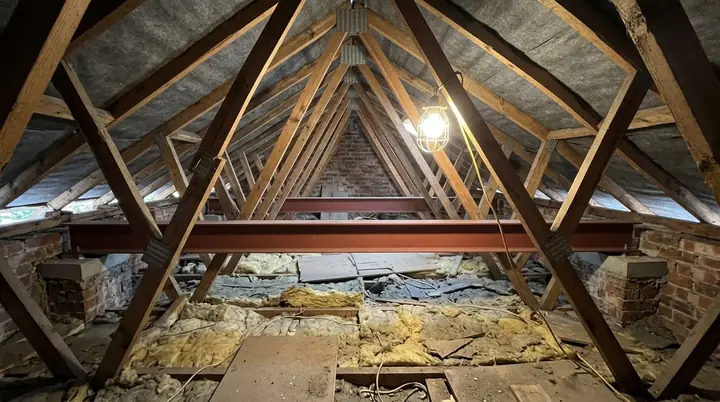
Truss Roof Loft Conversions for homes in Arnold
Arnold is a mid-sized town in Nottinghamshire, about 3 miles from Nottingham. Our surveyors cover the whole area, so a visit can usually be arranged within a few days.
Clay pantile and plain tile roofs are typical, so new dormers are usually tile-hung to match.
What does a truss roof loft conversion cost in Arnold?
The guide range for Arnold is £45,000 to £72,000 including VAT. Regional labour rates in the East Midlands are about 2% below the national figure we use on the prices page.
| Guide price in Arnold | £45,000 to £72,000 inc. VAT |
|---|---|
| Typical duration | 7 to 11 weeks on site |
| Survey and quote | Free |
Key facts
- Telescopic or bolted-splice steel beams are used where a full-length beam cannot be craned in.
- Trussed rafters work as a whole frame, so cutting any member without new support risks the roof and ceilings.
- Estate houses built after 2000 often already have good roof insulation, which is upgraded to current standards at rafter level.
- The existing ceiling stays in place because the new floor joists span between the beams above it.
Why use us in Arnold?
- Snagging visit after completion.
- Structural engineer's calculations on every project.
- Written, itemised quote after a free survey.
- Building regulations inspections booked and attended by us.
Planning and building control in Arnold
Planning rules are the same as for any other roof; the difference with a trussed roof is the structural design.
Building regulations approval is always needed. Building control checks the structure, fire safety, stairs, insulation, ventilation and electrics and issues a completion certificate at the end.
In England most loft conversions on houses are permitted development: the added roof volume must stay within 40 cubic metres on a terraced house or 50 cubic metres on a semi-detached or detached house, nothing may sit higher than the existing ridge or project forward of the roof slope facing the road, and materials must be similar in appearance. Flats, maisonettes and houses on designated land such as conservation areas do not have these rights.
How the work runs
Design and fixed quote
You receive layout options and a written, itemised price that does not change unless you change the design.
Neighbour notices
Where shared walls are involved we prepare the notices and a record of the neighbour's property before work starts.
Scaffold and structure
Scaffolding goes up, steel and new floor joists go in, and the roof is opened and made weathertight.
Finish and certificate
Plastering, second fix, decorating and the final inspection, after which you receive the completion certificate.
Truss Roof Loft Conversions in Arnold: your questions
Do I need planning permission in Arnold?
Planning rules are the same as for any other roof; the difference with a trussed roof is the structural design. We confirm the position with the local planning authority before work starts.
How soon can you start in Arnold?
Design and approvals usually take six to ten weeks. Building work in Nottinghamshire is then scheduled for the next available start date, which we confirm in writing.
How long will the work take?
A truss roof loft conversion typically takes 7 to 11 weeks on site. Weather and any changes you make to the design can alter that.
How do I know if I have a trussed roof?
Look in the loft. If you see many thin timbers forming repeated W shapes joined with metal plates, at about 600mm spacing, it is a trussed rafter roof.
Do I need permission from the house builder?
Sometimes. Check the title deeds for restrictive covenants. On newer estates the developer or a management company may need to give consent.