Truss Roof Loft Conversions in Hadleigh
We carry out truss roof loft conversions for homeowners in Hadleigh and across Essex. A typical project here costs £48,000 to £76,500 including VAT and takes 7 to 11 weeks on site.
- Free home survey
- Fixed written quote
- Drawings and engineer included
- Building control handled
- UK-wide teams
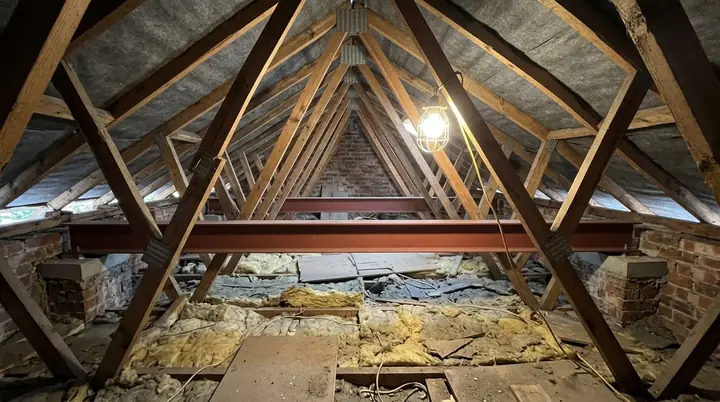
Truss Roof Loft Conversions for homes in Hadleigh
Hadleigh, 5 miles from Southend-on-Sea, is within the part of Essex we cover. We also work in South Benfleet, Rayleigh, Canvey Island.
Post-war estates and newer developments mean trussed rafter roofs come up often, alongside 1930s semis nearer the town centres.
What does a truss roof loft conversion cost in Hadleigh?
Prices in Hadleigh follow our guide rate for the East of England, which is about 6% above the national guide. That puts a truss roof loft conversion at £48,000 to £76,500 including VAT. Your fixed quote follows the survey and sets out each stage payment.
| Guide price in Hadleigh | £48,000 to £76,500 inc. VAT |
|---|---|
| Typical duration | 7 to 11 weeks on site |
| Survey and quote | Free |
Key facts
- Newer houses may have a covenant from the developer that needs consent before the roof is altered.
- Estate houses built after 2000 often already have good roof insulation, which is upgraded to current standards at rafter level.
- Telescopic or bolted-splice steel beams are used where a full-length beam cannot be craned in.
- The usual method is a pair of steel beams at floor level and new rafters or purlin beams sistered to the trusses.
Why use us in Hadleigh?
- One contract for design, approvals and building, with a named project manager.
- Scaffold access through the roof, so the house stays usable.
- Clear start date and weekly progress updates.
- Daily tidy-up and floor protection on the route to the loft.
Planning and building control in Hadleigh
Planning rules are the same as for any other roof; the difference with a trussed roof is the structural design.
In England most loft conversions on houses are permitted development: the added roof volume must stay within 40 cubic metres on a terraced house or 50 cubic metres on a semi-detached or detached house, nothing may sit higher than the existing ridge or project forward of the roof slope facing the road, and materials must be similar in appearance. Flats, maisonettes and houses on designated land such as conservation areas do not have these rights.
Where beams bear on a shared wall, the Party Wall etc. Act 1996 requires written notice to the adjoining owner at least two months before work starts.
How the work runs
Approvals
We submit planning or lawful development applications where needed and deal with building control.
Scaffold and structure
Scaffolding goes up, steel and new floor joists go in, and the roof is opened and made weathertight.
Stairs and first fix
The staircase is fitted, then wiring, plumbing and insulation go in and are inspected.
Finish and certificate
Plastering, second fix, decorating and the final inspection, after which you receive the completion certificate.
Truss Roof Loft Conversions in Hadleigh: your questions
How much is a truss roof loft conversion in Hadleigh?
Our guide price in Hadleigh is £48,000 to £76,500 including VAT. A fixed quote follows a survey of your loft.
Do I need planning permission in Hadleigh?
Planning rules are the same as for any other roof; the difference with a trussed roof is the structural design. We confirm the position with the local planning authority before work starts.
Is the survey in Hadleigh really free?
Yes. The survey and quote are free. Drawings and calculations are charged only once you decide to go ahead.
How much does a truss roof loft conversion cost?
Our guide price is £48,000 to £76,500 including VAT. The extra steel and timber typically adds a few thousand pounds compared with a traditional cut roof.
Do I need permission from the house builder?
Sometimes. Check the title deeds for restrictive covenants. On newer estates the developer or a management company may need to give consent.