Semi-Detached Loft Conversions in Queenstown
Homeowners in Queenstown use us for semi-detached loft conversions because the survey, drawings, structural design, approvals and build sit under one contract. Guide price: £61,000 to £95,000 including VAT.
- Free home survey
- Fixed written quote
- Drawings and engineer included
- Building control handled
- UK-wide teams
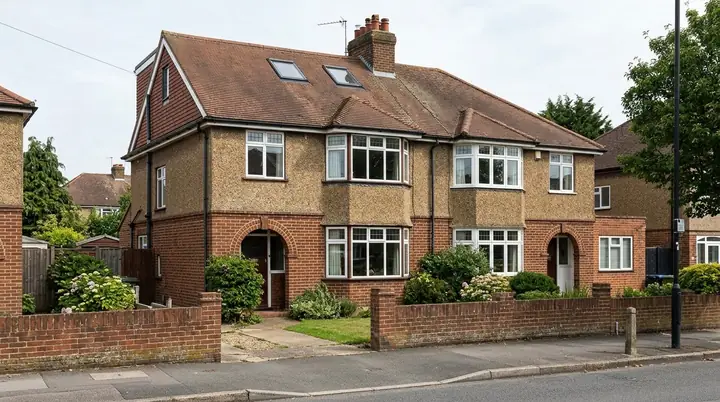
Semi-Detached Loft Conversions for homes in Queenstown
Queenstown, 2 miles from Central London, is within the part of Greater London we cover. We also work in Battersea, Pimlico, Latchmere.
Inter-war semis in the outer boroughs are classic hip to gable candidates.
What does a semi-detached loft conversion cost in Queenstown?
Prices in Queenstown follow our guide rate for London, which is about 25% above the national guide. That puts a semi-detached loft conversion at £61,000 to £95,000 including VAT. Your fixed quote follows the survey and sets out each stage payment.
| Guide price in Queenstown | £61,000 to £95,000 inc. VAT |
|---|---|
| Typical duration | 8 to 12 weeks on site |
| Survey and quote | Free |
Key facts
- The typical result is a double bedroom with fitted storage and an en-suite shower room.
- 1930s semis often have a purlin-and-strut roof that converts without difficulty.
- Only one neighbour shares a wall, so one party wall notice is usually needed.
- The side gable window lights the stair and is obscure-glazed where it overlooks a neighbour.
Why use us in Queenstown?
- Snagging visit after completion.
- Scaffold access through the roof, so the house stays usable.
- Daily tidy-up and floor protection on the route to the loft.
- Stage payments tied to completed work, not dates.
Planning and building control in Queenstown
Most semi-detached loft conversions in England are built under permitted development within the 50 cubic metre limit.
Building regulations approval is always needed. Building control checks the structure, fire safety, stairs, insulation, ventilation and electrics and issues a completion certificate at the end.
In England most loft conversions on houses are permitted development: the added roof volume must stay within 40 cubic metres on a terraced house or 50 cubic metres on a semi-detached or detached house, nothing may sit higher than the existing ridge or project forward of the roof slope facing the road, and materials must be similar in appearance. Flats, maisonettes and houses on designated land such as conservation areas do not have these rights.
How the work runs
Neighbour notices
Where shared walls are involved we prepare the notices and a record of the neighbour's property before work starts.
Scaffold and structure
Scaffolding goes up, steel and new floor joists go in, and the roof is opened and made weathertight.
Stairs and first fix
The staircase is fitted, then wiring, plumbing and insulation go in and are inspected.
Finish and certificate
Plastering, second fix, decorating and the final inspection, after which you receive the completion certificate.
Semi-Detached Loft Conversions in Queenstown: your questions
Will a loft conversion suit my house in Queenstown?
Most houses can be converted. The checks are head height under the ridge, roof pitch, the type of roof structure and where the stairs can go. We measure all four at the survey.
Is the survey in Queenstown really free?
Yes. The survey and quote are free. Drawings and calculations are charged only once you decide to go ahead.
Can I stay in the house during the work?
Yes. Most work is done from scaffolding through the roof. The staircase installation is the main period of disruption indoors.
Do I need planning permission?
Usually not in England if the added volume is within 50 cubic metres and the other permitted development conditions are met. We can obtain a lawful development certificate for certainty.
Do I need to tell my neighbour?
Where beams bear on the shared wall, a party wall notice is required in England and Wales. Even where it is not, we recommend telling neighbours early about scaffold and working hours.