Hip to Gable Loft Conversions in Sandbach
Planning a hip to gable loft conversion in Sandbach? We survey the roof, produce the drawings, deal with approvals and build it, with a guide price of £51,500 to £77,000 including VAT for Cheshire.
- Free home survey
- Fixed written quote
- Drawings and engineer included
- Building control handled
- UK-wide teams
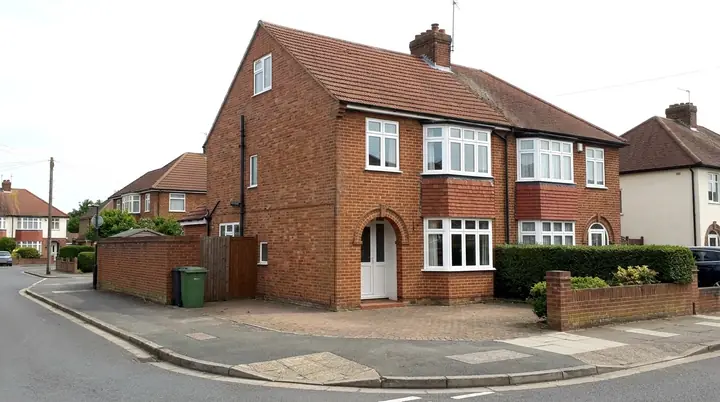
Hip to Gable Loft Conversions for homes in Sandbach
Our team covering Cheshire works in Sandbach and nearby Crewe, Congleton, Winsford. Travel is included in every quote, so there are no call-out charges for the survey.
Many terraces have shallow roof pitches, so head height is the first thing we measure.
What does a hip to gable loft conversion cost in Sandbach?
Budget £51,500 to £77,000 including VAT for a hip to gable loft conversion in Sandbach. Design fees, building control fees and party wall costs are itemised separately so you can see the whole cost.
| Guide price in Sandbach | £51,500 to £77,000 inc. VAT |
|---|---|
| Typical duration | 8 to 12 weeks on site |
| Survey and quote | Free |
Key facts
- Where the neighbour's half of a semi keeps its hip, the roofline changes, which some councils restrict in conservation areas.
- A hip to gable with a rear dormer is the largest conversion most 1930s semis can have under permitted development.
- On a detached house both hips can be converted, which is called a double hip to gable.
- The gable end is the usual place for the new staircase to land, directly above the existing stairs.
Why use us in Sandbach?
- Clear start date and weekly progress updates.
- Snagging visit after completion.
- Structural engineer's calculations on every project.
- Scaffold access through the roof, so the house stays usable.
Planning and building control in Sandbach
A hip to gable conversion is normally permitted development on a house in England, provided the total added volume stays within the limit and the house is not on designated land.
In England most loft conversions on houses are permitted development: the added roof volume must stay within 40 cubic metres on a terraced house or 50 cubic metres on a semi-detached or detached house, nothing may sit higher than the existing ridge or project forward of the roof slope facing the road, and materials must be similar in appearance. Flats, maisonettes and houses on designated land such as conservation areas do not have these rights.
Building regulations approval is always needed. Building control checks the structure, fire safety, stairs, insulation, ventilation and electrics and issues a completion certificate at the end.
How the work runs
Free home survey
A surveyor measures the loft, checks head height and roof structure and talks through what you want from the room.
Neighbour notices
Where shared walls are involved we prepare the notices and a record of the neighbour's property before work starts.
Scaffold and structure
Scaffolding goes up, steel and new floor joists go in, and the roof is opened and made weathertight.
Stairs and first fix
The staircase is fitted, then wiring, plumbing and insulation go in and are inspected.
Hip to Gable Loft Conversions in Sandbach: your questions
Can I stay in the house during the work?
Yes. Most work is done from scaffolding through the roof. The staircase installation is the main period of disruption indoors.
Will a loft conversion suit my house in Sandbach?
Most houses can be converted. The checks are head height under the ridge, roof pitch, the type of roof structure and where the stairs can go. We measure all four at the survey.
How much is a hip to gable loft conversion in Sandbach?
Our guide price in Sandbach is £51,500 to £77,000 including VAT. A fixed quote follows a survey of your loft.
How long does it take?
Allow 8 to 12 weeks on site. The roof is opened and made weathertight in the first two to three weeks, so the house is exposed for as short a time as possible.
Will it look odd next to my neighbour's hipped roof?
The roofline does become asymmetrical on a pair of semis. Using matching tiles and brick keeps it tidy, and it is now a very common sight on 1930s streets.